
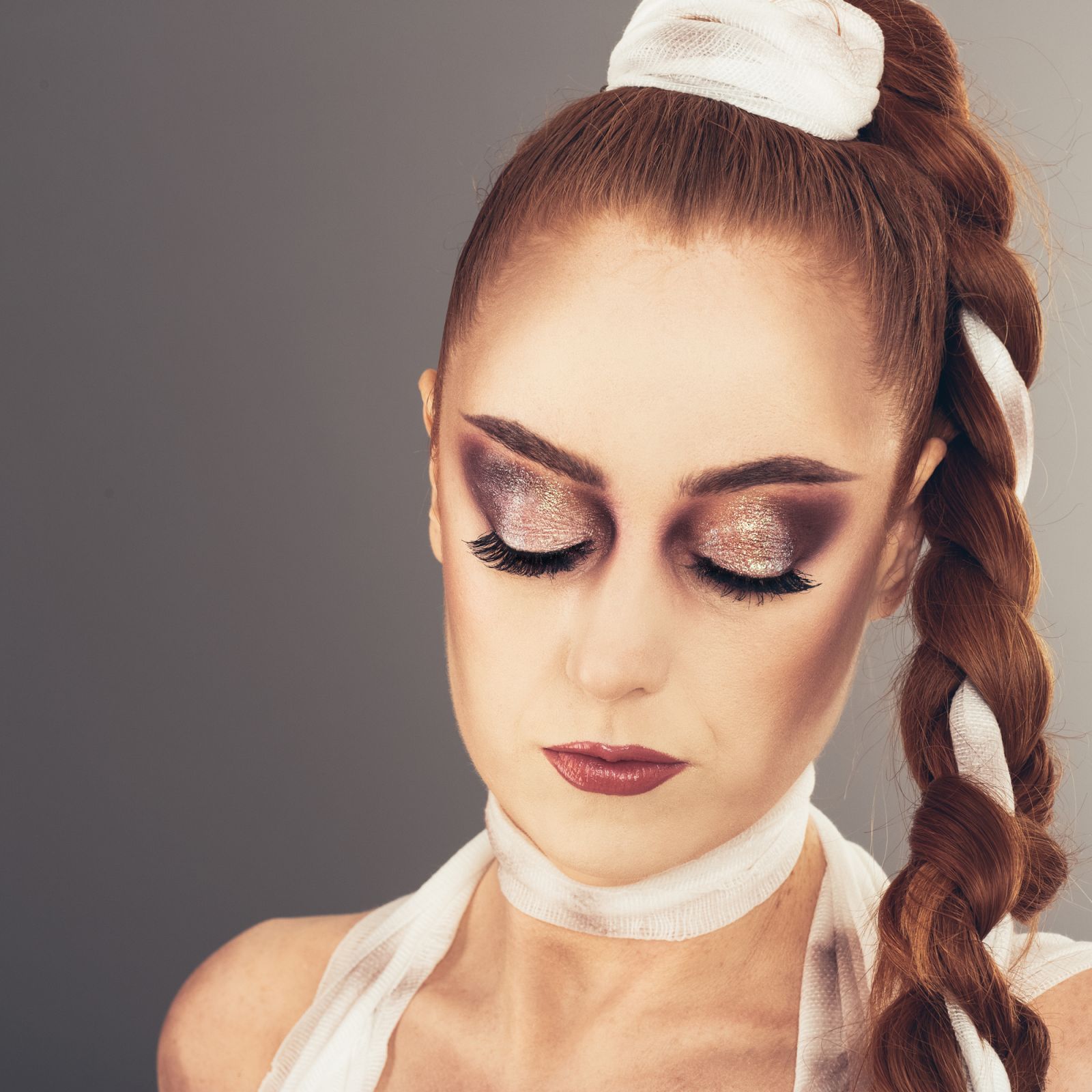




There are two versions of me that exist simultaneously. One is the version the world sees: the one who wears the makeup, captures the “Instaperfect” moments, meets demanding deadlines, and maintains a polished exterior. But there’s also another version of me that lives in the quiet shadows of chronic illness. This version is often horizontal, navigating a racing heart and a level of physical pain that requires an immense, silent strength just to endure.
I’ve spent years powering through because that’s what our society expects. We see posts claiming society welcomes equality, understanding, and compassion, but in reality, it’s lacking. I’ve sat at my desk with numb hands, forcing my fingers to type while my heart raced above 160bpm for no reason. And I’ve worked through the jagged recovery of Endometriosis surgery plus a second emergency surgery due to internal bleeding, and showed up after nights where the pain felt insurmountable. I’ve even sat through many days with a smile on my face, pretending I was okay even when the very feel of my clothes against my skin was hard to bear. The saddest part of all of this? I’m not alone. Thousands of people are also experiencing this daily, and that truly breaks my heart.
The performance of wellness
The most exhausting part of chronic illness isn’t always the physical pain; it’s the energy required to perform the act of wellness for the comfort of other people. When your daily baseline is a struggle to stay upright, you realise you no longer have a biological budget for anything that doesn’t contribute to your peace or happiness. My nervous system is already in a state of constant upheaval; I have to be very careful about the energy I invite into my space.
Over the years I’ve learned that I don’t have the capacity for connections that feel like an obligation or a heavy lift. It’s not about being unkind; it’s about survival. If a conversation or a project doesn’t contribute to a sense of calm or spark joy, it’s a drain from the energy I need just to function. One of the gentlest lessons I’ve learned in my 30s is that ‘No’ is a complete, compassionate sentence. It’s a vital tool for self-preservation, helping me protect the tiny pocket of peace I’ve managed to carve out, tear by tear.
The invisible equations of spoons in chronic illness
In the world of chronic illness, we often talk about energy in ‘spoons’ – each one representing a finite piece of ourselves we can give to the day. If you start with ten, a small chore like emptying the dishwasher might cost you two, and a shower could claim another three or four, leaving you almost empty before the morning is even over. It’s an exhausting, invisible math that makes even the simplest tasks feel like a mountain. And an equation that healthy people will never truly understand.
Because of this, my standards for my inner circle have shifted. True self-care isn’t just about a face mask, your favourite chocolate, and a night in reading a good book; sometimes it’s the difficult work of walking away from environments that drain your battery. It’s realising that staying in a toxic or indifferent space is an act of friction your body simply cannot afford.
Guarding my peace with love and intention
I’ve found that I’m often happiest in my own sanctuary – sipping Earl Grey, Joshua Kyan Aalampour in the background, working on my fiction in a candlelit room. Here, I don’t have to mask my pain or perform for anyone. I’ve reached a point where I realise my peace is the only thing that allows me to keep showing up for the world. I guard it not out of anger, but out of a deep respect for the life I am working so hard to sustain.
Maintaining the energy for the things that matter most – my career, my loved ones, and my creative passions – is an intentional choice I make every day. I thrive on the simple joy found in reading a good book, drawing, or the peace and happiness I feel being able to walk with my dog. I’ve also found a new love for exploring the world a little further through travel and fine dining. These adventures require a level of precision and energy that most might not see, but they provide a vital balance to the shadows of illness, reminding me that life is meant to be tasted and explored, not just endured.
The happiness tax
Behind the scenes of those happy moments is a quiet, heavy reality that often goes unseen. It’s the deep, hollow crash that follows a simple trip to the cinema, or the way my body aches after even a short drive. There are nights after a lovely dinner with friends where the weakness is so overwhelming that I’m left bedridden for the next two days, lacking even the strength to lift a mug to my lips to sip my tea.
I don’t share this for sympathy, but for understanding for everybody who is living with a chronic illness. It’s important to understand that every beautiful memory comes with a cost, and I’ve finally learned that it’s okay, and necessary, to rest deeply after I’ve given my all to the things and people I love.
So be gentle with the people you meet. In a world where so much is hidden behind carefully curated Instagram feeds, let kindness be your default, because everyone is carrying a story you haven’t read yet.
Want to stick around a little longer? You’ll find my other blog posts here.


